Seeds took forever to geminate. Many seeds duds.
Zinnia Seeds - Zahara Sunburst
Your zip code tells us your USDA Hardiness Zone — and your zone tells us the rest. We'll show you which plants are annuals or perennials right where you garden, and filter our full catalog down to what's actually built for your growing conditions.
Added to your cart
A member of the award-winning Zahara series of compact plants packed with vibrant, prolific blooms
Couldn't load pickup availability
BOTANICAL NAME
Zinnia elegans
LIFE CYCLE
SEED TYPE
LIGHT REQUIREMENT
BLOOM SEASON
GROWTH HABIT
PLANT HEIGHT
PLANT TYPE
COLOR
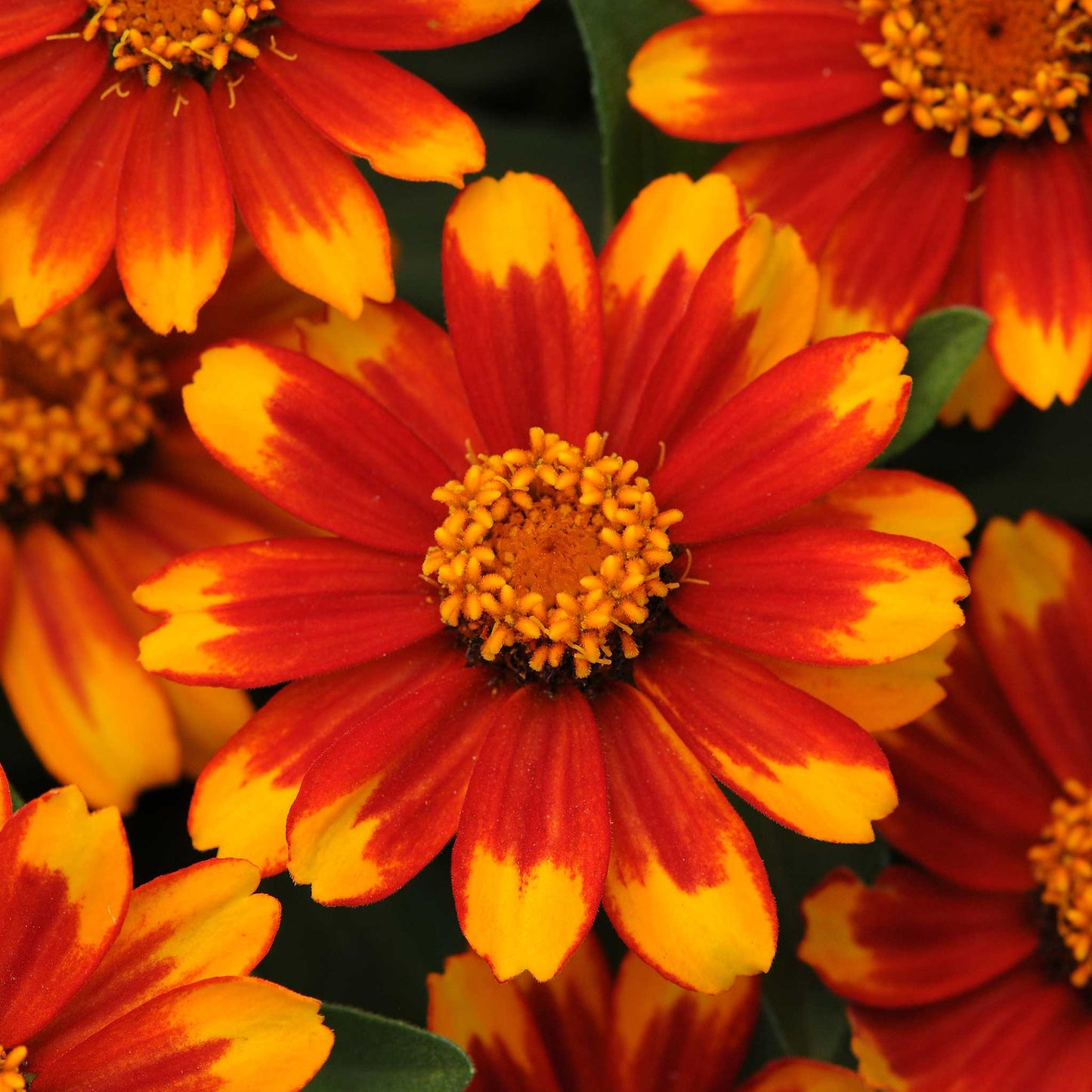
Zinnia Zahara Sunburst, a member of the Zahara series bred for remarkable disease tolerance and large, showy blooms, is a vibrant flower known for its intense color contrast and all-season performance. With its eye-catching gold and red bicolor blooms, this variety thrives in sunny gardens while resisting disease, making it a top choice for landscapers and home gardeners. It performs reliably through heat and drought, delivering nonstop color from spring to frost.
PLANTING SEASON
SOWING METHOD
PLANTING DEPTH
WATER NEEDS
PLANT SPACING
HARDINESS ZONES
COVERAGE
| Amount | Avg Seed Count | Recommended Coverage |
|---|---|---|
| Packet | 25 | Up to 80 Sq. Ft |
We guarantee that our seeds & bulbs will be true to type and ready to thrive. If something doesn't grow as expected, we will make it right. Questions? Call us at 855-440-2929

Preorders Now Open
Reserve your favorites before
the most-loved varieties sell out.
Zahara Sunburst Zinnia shows resistance to Mildew, meaning it's less susceptible to these under normal growing conditions — though resistant isn't a guarantee against them in every case.
Our Garden Support Team is here to help.
Call Us
(855) 974-4021
Mon - Fri • 9 - 5 ET
Email
service@edenbrothers.com
We’ll get back to you shortly!
Overall rating: 1.0 / 5 from 1 reviews.
Seeds took forever to geminate. Many seeds duds.
Kathryn R. 1/5 Verified
Zinnia Seeds - Zahara Sunburst
Store owner replied: Hello Alice C. Thank you for writing in to let us know about your experience. Black-Eyed Susan seed should be surface sown or only very lightly covered because light aids germination, with consistent moisture while establishing. Cool soil after a May sowing, allowing the seedbed to dry out, planting too deeply, or heavy rain washing or burying the small seeds could all reduce establishment. For Zone 5, cold stratification can also improve germination for many perennial/biennial Rudbeckia, so a fall sowing is a good option for another attempt because winter naturally provides the cold period. We have reached out to offer tips and a resolution, but we have not heard back from you yet. Please feel free to respond to that original email, and we'd be happy to help you further. We want you to have these beautiful flowers and have another chance to get them in your garden!